Healthcare Digital Marketing Strategies in 2026: A Complete Guide for Hospitals & Providers
The way patients find, evaluate, and choose healthcare providers has changed permanently. In 2026, more than 88% of patients begin their healthcare journey with an online search — before calling a clinic, before asking a friend, before stepping into a waiting room.
This shift has made digital marketing for healthcare not just useful, but essential. The global digital health market is projected to surpass $1.5 trillion by 2030, and healthcare providers who fail to build a strong online presence are already losing patients to competitors who have.
But healthcare digital marketing in 2026 is far more sophisticated than maintaining a website and posting on social media. It now involves AI-powered personalization, voice search optimization, telehealth-native campaigns, E-E-A-T content standards, online reputation management, and privacy-first patient engagement — all working together in a coordinated strategy.
Whether you are a solo practitioner, a specialty clinic, or a multi-location hospital network, this guide covers the most effective healthcare digital marketing strategies in 2026 — with actionable steps you can implement immediately.
Why Digital Marketing Is Critical for Healthcare in 2026
The healthcare industry faces a unique marketing challenge: patients are not just customers — they are people making life-critical decisions, often under stress or uncertainty. Digital marketing in this space must balance visibility and trust simultaneously.
Here is why investing in digital marketing for healthcare is non-negotiable in 2026:
- 77% of patients use search engines before booking an appointment (Google Health research, 2025)
- Telehealth adoption has permanently increased patient expectations for digital convenience
- Online reviews on Google, Practo, and Healthgrades directly influence provider choice — a 1-star rating increase can boost appointment bookings by up to 25%
- AI-powered search (Google AI Overviews, ChatGPT, Perplexity) now answers patient queries directly, meaning only the most authoritative, well-structured content gets cited
- 72% of patients say they prefer providers with easy-to-navigate digital experiences including online booking, chat support, and mobile-friendly websites
The providers winning in 2026 are those treating digital marketing as a clinical operation — data-driven, patient-centered, and continuously optimized.
Top 12 Healthcare Digital Marketing Strategies in 2026
1. Medical SEO with E-E-A-T Compliance
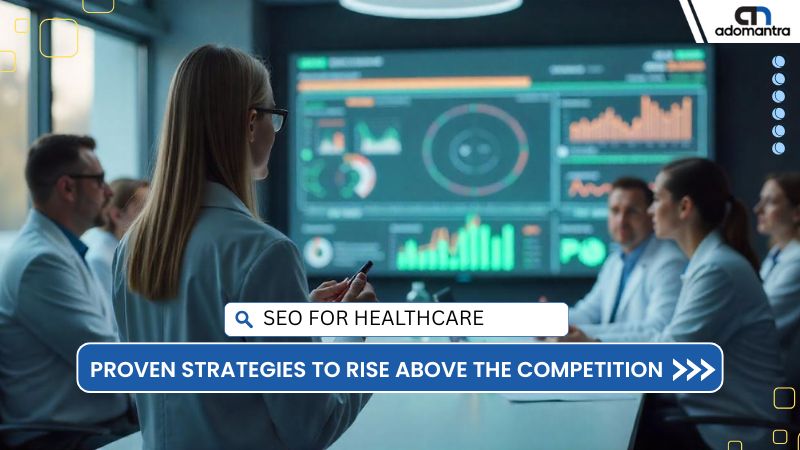
Search Engine Optimization remains the foundation of healthcare digital marketing — but in 2026, the rules are stricter and the stakes are higher. Healthcare falls under Google's YMYL (Your Money or Your Life) category, meaning Google applies elevated scrutiny to health-related content before ranking it.
The key framework governing this is E-E-A-T: Experience, Expertise, Authoritativeness, and Trustworthiness. To rank well, your content must demonstrate all four.
What this means in practice:
- Every health-related blog post or service page must be authored or reviewed by a qualified medical professional — with their name, credentials, and biography clearly displayed
- Cite reputable medical sources: AIIMS, WHO, PubMed, government health portals
- Keep all medical information current — outdated statistics or treatment information will hurt rankings
- Build authoritative backlinks from medical journals, hospital networks, and credible health publications
- Optimize for local SEO — "cardiologist near me" and "best hospital in [city]" are among the highest-converting searches in healthcare
2026 update: Structured content that directly answers patient questions (using clear headings, bullet points, and concise definitions) is now being extracted by Google AI Overviews and answer engines like Perplexity. Optimizing for these AI-generated answers (AEO — Answer Engine Optimization) is a key differentiator in 2026.
2. AI-Powered Patient Personalization
Artificial Intelligence has moved from a buzzword to a core operational tool in healthcare marketing. In 2026, AI analyzes patient behavior, appointment history, search patterns, and engagement data to deliver hyper-personalized communication at a scale that was impossible just three years ago.
Key applications:
- Personalized email campaigns: AI segments your patient database by condition, appointment history, and demographics — sending the right message to the right person at the right time (e.g., post-surgery follow-up reminders, annual checkup nudges, wellness tips based on previous consultations)
- Predictive outreach: AI models identify patients at risk of appointment dropout or health deterioration, enabling proactive outreach before issues escalate
- Dynamic website content: First-time visitors see different content than returning patients; content adapts based on the user's browsing behavior and inferred intent
- Chatbot triage: AI-powered chatbots on clinic websites handle appointment bookings, symptom-based queries, insurance questions, and prescription refill requests — 24/7, without human intervention
Providers using AI personalization report up to 40% higher patient engagement rates and significantly improved appointment show rates.
3. Online Reputation Management (ORM)
In a competitive healthcare landscape, patients routinely choose a provider with a 4.8-star rating over a 3.2-star alternative — even when both are equally qualified. In 2026, online reputation management is a frontline marketing function, not a reactive PR exercise.
Where patients leave reviews:
- Google Business Profile
- Practo (India-specific, extremely high search volume)
- Healthgrades and Zocdoc
- Facebook and Instagram
- Justdial
Your 2026 ORM strategy:
- Proactively ask satisfied patients to leave Google reviews — automated post-visit SMS or WhatsApp reminders significantly increase review volume
- Respond to every review — positive and negative — within 48 hours. A thoughtful response to a negative review builds more trust than ignoring it
- Monitor your brand mentions across all platforms using tools like Google Alerts or Mention
- Address misinformation about your practice promptly and professionally
The SEO connection: High ratings and review volume on Google Business Profile are confirmed local search ranking factors. More reviews = higher local pack visibility = more patient bookings.
4. Short-Form Video Marketing
Video is the highest-engagement content format for healthcare in 2026, and Short-Form Video Marketing (Reels, YouTube Shorts, TikTok) has become the dominant channel for reaching patients under 45.
Healthcare providers who publish consistent video content build the kind of trust that no amount of paid advertising can replicate — because patients can see, hear, and evaluate the doctor before ever visiting the clinic.
Content ideas that work:
- "Ask a Doctor" series answering the most Googled health questions in your specialty
- Behind-the-scenes of your clinic or hospital — humanizes the brand and reduces patient anxiety
- Procedure explainers in simple, jargon-free language (e.g., "What happens during an MRI?")
- Patient testimonials (with proper consent and HIPAA/DPDPA compliance)
- Health myths vs. facts — these perform exceptionally well on social media because they encourage sharing
- Seasonal health tips (monsoon hygiene, summer dehydration, winter wellness)
Best platforms for healthcare video in India (2026): YouTube (for long-form trust content), Instagram Reels (for reach and discovery), and WhatsApp Status (for patient retention and community building).
5. Telehealth-Native Digital Marketing
Telehealth has permanently reshaped how patients access healthcare — and in 2026, it must be integrated into your digital marketing strategy, not treated as an afterthought.
Patients now search specifically for online consultations: "online doctor consultation for diabetes," "teleconsultation dermatologist India," "video appointment psychiatrist." If your digital presence does not make it clear that you offer telehealth services, you are invisible to this fast-growing patient segment.
Telehealth marketing tactics:
- Create dedicated landing pages for each telehealth service (not a single generic "teleconsultation" page) — this improves both SEO and conversion
- Run Google Search ads targeting telehealth-specific queries with clear calls to action ("Book a Video Consultation Today")
- Highlight telehealth options prominently on your homepage, Google Business Profile, and all social media bios
- Build FAQ content specifically around teleconsultation: "Is it safe?", "How does payment work?", "What conditions can be treated online?"
6. Social Media Marketing with Community Building
Social media in 2026 is not about broadcasting — it is about building communities of engaged, informed patients who trust your brand and return to it consistently.
Platform strategy by audience:
| Platform | Best For | Content Type |
|---|---|---|
| Under-45 patients, wellness brands | Reels, stories, carousels | |
| 35–65 age group, local communities | Posts, groups, events | |
| YouTube | All ages, condition-specific education | Long-form explainers, patient journeys |
| B2B healthcare, hospital networks | Thought leadership, research | |
| Existing patient retention | Broadcasts, appointment reminders |
2026 tactics:
- Create condition-specific online communities (diabetes support groups, maternal health communities, mental health forums) that keep patients engaged between appointments
- Partner with micro-influencers in the health and wellness space — they have higher engagement and more niche, trusting audiences than celebrity partnerships
- Use social media messaging (Instagram DM, Facebook Messenger) for real-time patient queries with AI chatbot backup
7. Content Marketing & Medical Blogging
A well-maintained medical blog remains one of the highest-ROI digital marketing investments for healthcare providers in 2026. Each well-optimized blog post is a permanent asset that drives organic traffic, establishes authority, and answers patient questions around the clock.
In 2026, the bar is higher. Generic health content no longer ranks. Google's AI Overviews and Helpful Content systems actively deprioritize shallow, thin, or AI-generated-without-review content.
What high-performing healthcare content looks like in 2026:
- Authored or reviewed by a named, credentialed medical professional
- Minimum 1,500–2,500 words for competitive topics
- Structured with clear H2/H3 headings, FAQs, and data from reputable sources
- Includes original insights — case context, clinical perspective, local relevance — not just rephrased Wikipedia content
- Updated regularly (at minimum annually) to maintain freshness signals
High-value blog topics for healthcare providers in India:
- "Signs and symptoms of [condition] you should never ignore"
- "Best diet plan for [condition] — doctor-approved guide"
- "When should you see a [specialist]? A complete guide"
- "[Procedure name] — what to expect before, during, and after"
- "Government health schemes available in [state] for [condition]"
8. Pay-Per-Click (PPC) Advertising for Patient Acquisition
Organic SEO takes time. When you need patient appointments now, Google Ads and Meta Ads deliver immediate visibility to high-intent audiences.
Healthcare PPC in 2026 is highly targeted — you can reach patients searching for your exact specialty in your exact geography, within minutes of setting up a campaign.
Winning PPC strategies for healthcare:
- Target high-intent keywords like "best orthopedic surgeon in [city]" or "IVF clinic near me" rather than broad health terms
- Use call extensions prominently — most healthcare conversions happen via phone call, not form fill
- Run remarketing campaigns to re-engage website visitors who did not book an appointment on their first visit
- Create separate landing pages for each ad campaign — sending all traffic to your homepage is the fastest way to waste ad spend
- Comply with Google's Healthcare & Medicines advertising policies — certain medical claims and targeting restrictions apply
Meta Ads (Facebook and Instagram) are especially effective for awareness campaigns, wellness programs, health check-up packages, and reaching patients by condition-relevant demographics.
9. Email & WhatsApp Marketing for Patient Retention
Acquiring a new patient costs 5–7x more than retaining an existing one. Email and WhatsApp marketing are the most cost-effective channels for keeping your existing patients engaged, informed, and returning.
Email marketing in 2026:
- Automated appointment reminders reduce no-show rates by up to 30%
- Post-visit follow-up emails improve patient satisfaction scores and generate review requests
- Monthly health newsletters with original content (seasonal tips, new services, doctor Q&As) keep your brand top-of-mind
- Birthday and wellness anniversary messages build emotional connection
WhatsApp marketing (especially relevant for India):
- WhatsApp has 500 million+ users in India — it is the most direct patient communication channel available
- Use the WhatsApp Business API for appointment confirmations, prescription reminders, lab report delivery, and health tips
- Build condition-specific broadcast lists for proactive patient education
- Always maintain DPDPA (Digital Personal Data Protection Act) compliance — get explicit patient consent before messaging
10. Local SEO & Google Business Profile Optimization
For most healthcare providers, the majority of patients come from within a 5–15 km radius. Local SEO is what ensures you appear at the top of Google Maps and local search results when nearby patients search for your services.
Google Business Profile (GBP) is your most powerful local SEO tool — and it is free.
Optimize your GBP in 2026:
- Keep NAP (Name, Address, Phone) consistent across all platforms — inconsistencies hurt local rankings
- Add all services with detailed descriptions and relevant keywords
- Upload high-quality photos of your clinic, team, and equipment — profiles with photos receive 42% more direction requests
- Post weekly updates (health tips, service announcements, festive offers) to signal activity to Google
- Enable online appointment booking directly through your GBP listing
- Monitor and respond to all reviews within 48 hours
Local SEO beyond GBP: Build citations on Justdial, Sulekha, Practo, IndiaMart, and local health directories. Ensure your website has location-specific landing pages if you operate multiple branches.
11. Privacy-First Patient Data Strategy
Healthcare data is among the most sensitive personal information that exists. In 2026, a privacy-first approach to digital marketing is not just an ethical obligation — it is a legal requirement under India's Digital Personal Data Protection Act (DPDPA) and a trust signal that patients actively look for.
Key privacy practices for healthcare marketers:
- Collect only the patient data you actually need — avoid over-collecting through website forms
- Display a clear, plain-language privacy policy and cookie consent banner on your website
- Get explicit, documented consent before sending marketing communications
- Never use third-party cookies for healthcare retargeting without consent
- Transition to zero-party data collection — information patients voluntarily share through health surveys, preference centers, and interactive tools — which is both compliant and more accurate than inferred behavioral data
- Ensure all third-party tools you use (CRM, email platform, chatbot) are DPDPA-compliant
Patients who trust that their health data is handled responsibly are significantly more likely to book appointments, leave positive reviews, and refer others.
12. Outsourcing to a Healthcare Digital Marketing Agency
Unlike most industries, healthcare professionals face a fundamental constraint: time. Surgeons, physicians, and hospital administrators cannot simultaneously manage SEO campaigns, content calendars, ad accounts, and social media profiles — nor should they.
Partnering with a specialized healthcare digital marketing agency gives you access to a full team of strategists, content writers, SEO specialists, and ad managers who understand both the technical requirements of digital marketing and the compliance landscape of healthcare.
What a good healthcare digital marketing partner delivers:
- A data-driven digital strategy tailored to your specialty, geography, and patient demographic
- SEO-optimized, medically reviewed content produced at scale
- Compliant PPC campaigns that maximize appointment bookings within Google and Meta's healthcare ad policies
- Monthly analytics reporting that ties marketing activity directly to patient acquisition metrics
Healthcare Digital Marketing in 2026: Key Trends at a Glance
| Trend | Why It Matters in 2026 |
|---|---|
| AI-powered personalization | Delivers relevant content to each patient at scale |
| E-E-A-T content compliance | Required to rank for YMYL healthcare queries |
| AI Overview (AEO) optimization | Content must be structured for extraction by AI search engines |
| Short-form vertical video | Highest engagement for patient education and trust-building |
| Online reputation management | Reviews directly impact both patient choice and local SEO rankings |
| Privacy-first marketing (DPDPA) | Legal requirement + trust signal for Indian healthcare providers |
| Telehealth-native campaigns | Captures the fast-growing online consultation patient segment |
| WhatsApp marketing | Most direct patient communication channel in India |
Frequently Asked Questions (FAQ)
What is healthcare digital marketing?
Healthcare digital marketing is the use of online channels — search engines, social media, email, websites, and paid advertising — to attract new patients, retain existing ones, build brand authority, and communicate health information. It covers everything from local SEO and Google Ads to WhatsApp campaigns and medical blogging.
Why is digital marketing important for hospitals and clinics in 2026?
Because 88% of patients now search online before choosing a provider. A hospital or clinic without a strong digital presence is effectively invisible to a majority of potential patients. Digital marketing builds visibility, trust, and patient loyalty — all three of which directly impact revenue and growth.
What is the most effective digital marketing strategy for healthcare?
There is no single "best" strategy — the most effective approach combines medical SEO (for long-term organic visibility), Google Ads (for immediate patient acquisition), online reputation management (for trust), and content marketing (for authority). The right mix depends on your specialty, patient demographic, and budget.
How does SEO work for healthcare providers?
Healthcare SEO involves optimizing your website and content so that it appears at the top of Google when patients search for your services. This includes keyword research (finding what patients actually search for), on-page optimization (title tags, headings, content structure), local SEO (Google Business Profile, local citations), and E-E-A-T compliance (author credentials, medical accuracy, trust signals).
Is social media marketing effective for doctors and hospitals?
Yes — particularly for awareness, education, and community building. Short-form video (Reels, YouTube Shorts) is especially effective for building patient trust before they ever visit the clinic. However, social media should be part of a broader strategy, not the only channel you invest in.
How can a healthcare provider comply with data privacy laws while still running digital marketing campaigns?
By adopting a zero-party data strategy (collecting information patients willingly share), getting explicit consent before marketing communications, using DPDPA-compliant tools, and being transparent about how patient data is used. A reputable healthcare digital marketing agency will build compliance into your campaigns from the start.
Conclusion
Healthcare digital marketing in 2026 is more complex, more competitive, and more consequential than ever before. The strategies that worked in 2021 — a basic website, occasional social media posts, and a few Google Ads — are no longer enough to stand out in a market where patients have more choices, more information, and higher digital expectations than ever.
The providers growing their patient base in 2026 are those investing in AI-powered personalization, E-E-A-T-compliant content, local SEO, online reputation management, telehealth marketing, and privacy-first patient engagement — all coordinated around a clear strategy tied to measurable outcomes.
You do not need to implement everything at once. Start with your Google Business Profile and local SEO, build your content authority, and add channels as your strategy matures. The important thing is to start — because every month without a digital marketing strategy is patients going to a competitor who has one.