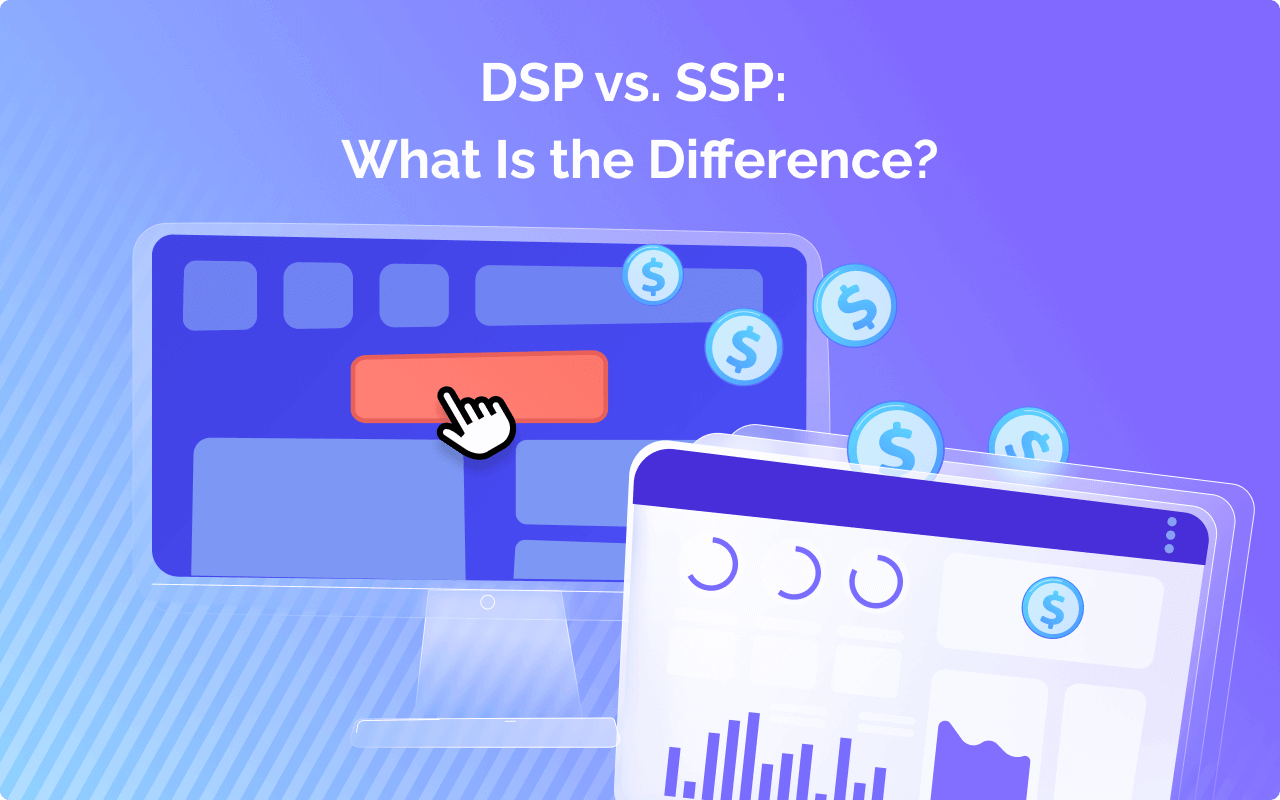
DSP vs SSP — Understanding Digital Advertising Platforms in 2026
In the fast-paced world of digital advertising, knowing how different platforms work is essential to running effective, efficient campaigns. Two of the most important platforms in programmatic advertising are Demand-Side Platforms (DSPs) and Supply-Side Platforms (SSPs). Though they serve different roles in the advertising ecosystem, they work together seamlessly to make the buying and selling of digital ad inventory smooth, fast, and data-driven.
In 2026, the global programmatic advertising market is projected to surpass $725 billion, with over 90% of all digital display advertising now transacted programmatically. Understanding DSPs and SSPs is no longer optional for marketers — it is a foundational requirement for anyone investing in digital advertising.
The core difference is straightforward: DSPs let advertisers buy ad space from multiple publishers and exchanges, while SSPs help publishers manage and sell their ad space to advertisers at the best possible price. In this article, we explore the difference between DSP and SSP in depth — analysing their features, benefits, and how they work together in the broader digital advertising ecosystem.
Table of Contents
- Importance of Understanding DSP vs SSP
- What is a Demand-Side Platform (DSP)?
- What is a Supply-Side Platform (SSP)?
- DSP vs SSP — Key Differences at a Glance
- How Real-Time Bidding (RTB) Powers DSP and SSP
- How DSP and SSP Work Together
- DSP vs SSP — Which One Does Your Business Need?
- How Adomantra Can Help
- Frequently Asked Questions
Importance of Understanding DSP vs SSP in 2026
Knowing the difference between a Demand-Side Platform (DSP) and a Supply-Side Platform (SSP) is critical for any business operating in digital advertising. Each platform plays a specific role in the ad tech ecosystem, and understanding how they function helps brands and advertisers improve their media buying and selling strategies significantly.
In 2026, programmatic advertising has become the default method for transacting digital media. The rise of AI-powered bidding algorithms, privacy-first data strategies, and omnichannel campaign management has made programmatic platforms more sophisticated — and more impactful — than ever before. Choosing the right platform can help businesses:
- Maximise return on ad spend (ROAS) by targeting audiences with precision
- Access premium inventory across thousands of publishers through a single platform
- Automate media buying decisions that would be impossible to execute manually at scale
- Optimise campaigns in real time based on performance signals and AI-driven recommendations
For publishers, choosing the right SSP determines how much revenue their ad inventory generates and how efficiently their audience is monetised. For advertisers, the right DSP determines whether their budget reaches the right people, in the right context, at the right time.
Whether you are new to programmatic advertising or looking to deepen your understanding of the technology stack, mastering DSP vs SSP is the essential starting point.
What is a Demand-Side Platform (DSP)?
A Demand-Side Platform (DSP) is a technology platform used by advertisers, agencies, and brands to purchase digital advertising inventory programmatically — automatically, in real time, and at scale. DSPs connect to multiple ad exchanges, supply-side platforms, and publisher networks simultaneously, giving advertisers access to a vast inventory of available ad impressions across websites, mobile apps, connected TV (CTV), digital audio, and more.
The defining characteristic of a DSP is its ability to evaluate each available ad impression in milliseconds and decide whether to bid on it — and at what price — based on the advertiser's targeting criteria, budget constraints, and campaign objectives. This process, known as Real-Time Bidding (RTB), happens faster than a human blink, yet it is extraordinarily precise.
Key functions of a DSP:
- Centralised campaign management: Manage multiple ad campaigns across display, video, mobile, CTV, audio, and native formats from a single unified interface.
- Audience targeting: Target specific audiences based on demographics, interests, online behaviour, purchase intent, location, device type, and first-party data segments.
- Real-Time Bidding (RTB): Automatically bid for individual ad impressions in real time based on the probability that a specific user will engage with the ad.
- Frequency capping: Control how many times a specific user sees your ad across a campaign, preventing overexposure and ad fatigue.
- Cross-channel reach: Reach audiences consistently across web, mobile, app, CTV, and digital out-of-home (DOOH) environments from one platform.
- Performance optimisation: AI-powered algorithms continuously adjust bids, targeting, and creative selection to maximise campaign performance against your KPIs.
- Reporting and analytics: Access granular performance data — impressions, clicks, conversions, viewability, and ROAS — to evaluate and optimise campaigns in real time.
Leading DSP examples in 2026: Google Display & Video 360 (DV360), The Trade Desk, Amazon DSP, MediaMath, and Xandr.
For advertisers running display, video, or CTV advertising campaigns, a DSP is the essential tool that makes programmatic buying both possible and scalable.
What is a Supply-Side Platform (SSP)?
A Supply-Side Platform (SSP) is a technology platform used by website owners, app developers, and digital publishers to manage, sell, and optimise their advertising inventory programmatically. SSPs give publishers access to a wide pool of buyers — including DSPs, ad networks, and direct demand sources — and use automated auction mechanisms to sell each available ad impression to the highest eligible bidder in real time.
Before SSPs, publishers had to negotiate individual deals with each advertiser or ad network, a time-consuming process that often resulted in unsold inventory or suboptimal pricing. SSPs revolutionised publisher monetisation by aggregating demand from hundreds of buyers simultaneously and running real-time auctions for every single ad impression on the publisher's platform.
Key functions of an SSP:
- Inventory management: Organise, categorise, and manage all available ad placements across a publisher's web, mobile, and app inventory in one platform.
- Yield optimisation: Maximise revenue per impression by running competitive auctions that surface the highest possible bid for each placement.
- Real-Time Bidding (RTB) integration: Connect to hundreds of DSPs and ad exchanges simultaneously to maximise demand and competition for each impression.
- Header bidding support: Enable multiple DSPs and buyers to bid simultaneously before the publisher's ad server makes a decision — increasing competition and revenue.
- Floor price management: Set minimum acceptable prices for specific inventory to prevent undervaluation of premium placements.
- Brand safety controls: Block categories of advertisers or specific brands from appearing on the publisher's inventory to protect content quality and audience trust.
- Reporting and analytics: Track fill rates, eCPMs, revenue by placement, and demand partner performance to continuously optimise monetisation strategy.
Leading SSP examples in 2026: Google Ad Manager, Magnite, PubMatic, OpenX, and Index Exchange.
DSP vs SSP — Key Differences at a Glance
| Feature | DSP (Demand-Side Platform) | SSP (Supply-Side Platform) |
|---|---|---|
| Primary user | Advertisers, brands, agencies | Publishers, website owners, app developers |
| Core function | Buying ad inventory | Selling ad inventory |
| Goal | Reach target audience efficiently | Maximise revenue from ad space |
| Side of transaction | Demand side (buyer) | Supply side (seller) |
| Bidding role | Submits bids for impressions | Auctions impressions to highest bidder |
| Optimises for | ROAS, conversions, reach | eCPM, fill rate, revenue per impression |
| Key feature | Audience targeting, RTB bidding | Yield optimisation, header bidding |
| Data used | First-party, third-party audience data | Publisher first-party data, contextual data |
| Ad formats | Display, video, CTV, native, audio | All formats available in publisher inventory |
| Examples | The Trade Desk, DV360, Amazon DSP | Magnite, PubMatic, Google Ad Manager |
How Real-Time Bidding (RTB) Powers DSP and SSP
Real-Time Bidding (RTB) is the auction mechanism that connects DSPs and SSPs in milliseconds. Understanding RTB is key to understanding why DSPs and SSPs are so powerful — and why they have become the dominant infrastructure for digital advertising.
Here is how the RTB process works in 2026:
- User visits a page: A user visits a publisher's website or opens a mobile app. As the page loads, the publisher's SSP sends an ad request to connected ad exchanges and DSPs, containing anonymised data about the user and the ad placement (size, format, page context).
- DSPs evaluate the impression: Each connected DSP receives the bid request and evaluates it in milliseconds — cross-referencing the user data against the advertiser's targeting criteria and the campaign's performance goals.
- Bids are submitted: DSPs that want to show an ad submit their bids — the maximum price they are willing to pay for that specific impression.
- SSP runs the auction: The SSP collects all bids and selects the winner — typically the highest bid above the publisher's floor price (the minimum acceptable price).
- Ad is displayed: The winning advertiser's ad is served to the user in real time — all within 100–200 milliseconds, before the page has finished loading.
- Transaction recorded: Both the DSP and SSP record the transaction, updating campaign spend, publisher revenue, and performance analytics.
This process runs billions of times every day across the global web — making RTB one of the most sophisticated automated marketplaces ever built. Understanding how programmatic advertising works in full gives advertisers and publishers alike a significant advantage in leveraging these platforms effectively.
How DSP and SSP Work Together
DSPs and SSPs work in tandem to facilitate the efficient, automated buying and selling of digital ad inventory. They represent the two sides of the same programmatic marketplace — demand and supply — and their collaboration is what makes modern programmatic advertising function at scale.
When an advertiser uses a DSP to launch a campaign, the platform submits real-time bids for available ad impressions across every connected exchange and publisher network. On the supply side, the SSP manages those impressions and runs auctions to find the highest eligible buyer for each placement. When a DSP's bid wins, the ad is instantly served to the target user — the entire process completing in under 200 milliseconds.
The key collaboration mechanisms in 2026:
- Ad exchanges as the marketplace: Ad exchanges sit between DSPs and SSPs, providing the neutral auction infrastructure where bids and inventory meet. Major exchanges include Google Ad Exchange, OpenX, and Magnite.
- Header bidding: A more advanced integration where SSPs allow multiple DSPs to bid simultaneously before the publisher's primary ad server is consulted — increasing competition and maximising publisher revenue beyond what standard waterfall auctions could achieve.
- Private Marketplaces (PMPs): Premium publishers use SSPs to offer exclusive inventory to selected DSP buyers through private, invitation-only auctions — ensuring brand safety and premium placement quality for advertisers.
- AI-powered optimisation: In 2026, both DSPs and SSPs use machine learning to continuously refine their decisions — DSPs automatically adjust bids based on performance signals, while SSPs dynamically manage floor prices and demand partner prioritisation to maximise revenue.
The seamless collaboration between DSPs and SSPs ensures that advertisers reach the right audiences efficiently while publishers monetise their inventory at the highest possible value. This is the foundation of modern attention-based buying — where ad spend flows toward environments where audiences are most engaged and receptive.
DSP vs SSP — Which One Does Your Business Need?
The answer depends entirely on your role in the digital advertising ecosystem:
Choose a DSP if you are an advertiser or brand:
- You want to reach specific audiences across multiple websites and apps without negotiating individual publisher deals
- You need to run data-driven, targeted campaigns at scale with real-time performance optimisation
- You want to manage display, video, CTV, mobile, and native campaigns from a single unified platform
- You are focused on metrics like ROAS, conversions, reach, frequency, and brand awareness
Choose an SSP if you are a publisher or website owner:
- You want to maximise revenue from your ad inventory without manually managing advertiser relationships
- You need to connect to multiple demand sources simultaneously to drive competition for your ad placements
- You want to set minimum price floors, enforce brand safety controls, and manage yield across all your digital properties
- You are focused on metrics like eCPM, fill rate, revenue per session, and overall ad revenue growth
It is worth noting that some large media companies and holding groups operate on both sides — using SSPs to monetise their owned media and DSPs to manage advertising for their clients. In such cases, understanding both platforms becomes doubly important.
Comparing how programmatic media compares to traditional media buying can also help clarify whether DSP-based programmatic advertising is the right evolution for your current media strategy.
Let Adomantra Help You Navigate DSP and SSP for Your Business
Adomantra, with its deep expertise in digital advertising solutions, can assist you in choosing, implementing, and optimising the right platform based on your specific business objectives. Our programmatic team has hands-on experience managing DSP campaigns and SSP integrations across industries including e-commerce, healthcare, real estate, FMCG, education, and financial services.
If you are an advertiser looking to optimise ad spend, reach your target audience with precision, and enhance campaign performance at scale, a DSP is the right tool — and Adomantra's team can set up, manage, and continuously optimise your programmatic campaigns to deliver maximum ROAS.
If you are a publisher looking to maximise ad revenue from your digital assets, an SSP combined with header bidding implementation would provide the necessary tools and strategies to sell your inventory at the highest possible value.
Adomantra's expert team guides you through the entire decision-making process — from platform selection and technical integration to audience strategy, creative development, and performance reporting. Whether you are focused on demand generation or supply management, we tailor solutions to your specific business goals and budget.
Ready to unlock the full potential of programmatic advertising for your brand? Get your free programmatic advertising audit from Adomantra today ?
Frequently Asked Questions about DSP vs SSP
Q1: What is the difference between a DSP and an SSP?
A DSP (Demand-Side Platform) is used by advertisers to buy digital ad inventory programmatically, focusing on audience targeting, campaign management, and ROI optimisation. An SSP (Supply-Side Platform) is used by publishers to sell their ad inventory, focusing on yield maximisation, demand aggregation, and revenue optimisation. DSPs and SSPs represent the buyer and seller sides of the same programmatic marketplace.
Q2: How do DSPs and SSPs work together in programmatic advertising?
DSPs submit real-time bids for ad impressions managed by SSPs. SSPs auction those impressions to the highest eligible bidder. When a DSP wins, the ad is instantly served to the target user — the entire process completing in under 200 milliseconds. This automated, auction-based system is called Real-Time Bidding (RTB), and it powers the majority of all digital display advertising transacted today.
Q3: What is a Demand-Side Platform (DSP)?
A DSP is a technology platform that allows advertisers to buy digital ad inventory automatically across multiple publishers and ad exchanges from a single interface. It uses real-time bidding to purchase individual ad impressions based on audience data and campaign targeting criteria, enabling advertisers to reach specific audiences at scale across web, mobile, app, CTV, and other digital channels.
Q4: What is a Supply-Side Platform (SSP)?
An SSP is a technology platform that helps digital publishers manage and sell their advertising inventory programmatically. It connects the publisher's inventory to hundreds of demand sources simultaneously — including DSPs, ad networks, and direct buyers — and runs real-time auctions to maximise the revenue earned from each available ad impression.
Q5: How do you choose between a DSP and SSP for your advertising needs?
Choose a DSP if you are an advertiser wanting to buy targeted ad space at scale and optimise campaign performance. Choose an SSP if you are a publisher wanting to sell your ad inventory and maximise revenue. If you are unsure which is right for your business, Adomantra's programmatic team can assess your objectives and recommend the optimal technology setup.
Q6: What is header bidding and how does it relate to SSPs?
Header bidding is an advanced programmatic technique where publishers allow multiple DSPs and demand partners to bid simultaneously on an ad impression before the publisher's primary ad server makes its decision. It is managed through SSPs and significantly increases competition for each impression — resulting in higher eCPMs and greater revenue for publishers compared to the older waterfall bidding model.
Q7: Are DSPs and SSPs relevant for small businesses?
Yes. While DSPs and SSPs were initially built for enterprise advertisers and large publishers, the programmatic ecosystem has evolved to be accessible at virtually any scale. Managed programmatic services — like those offered by Adomantra — allow small and mid-size businesses to benefit from DSP-level targeting and automation without managing the technology directly.